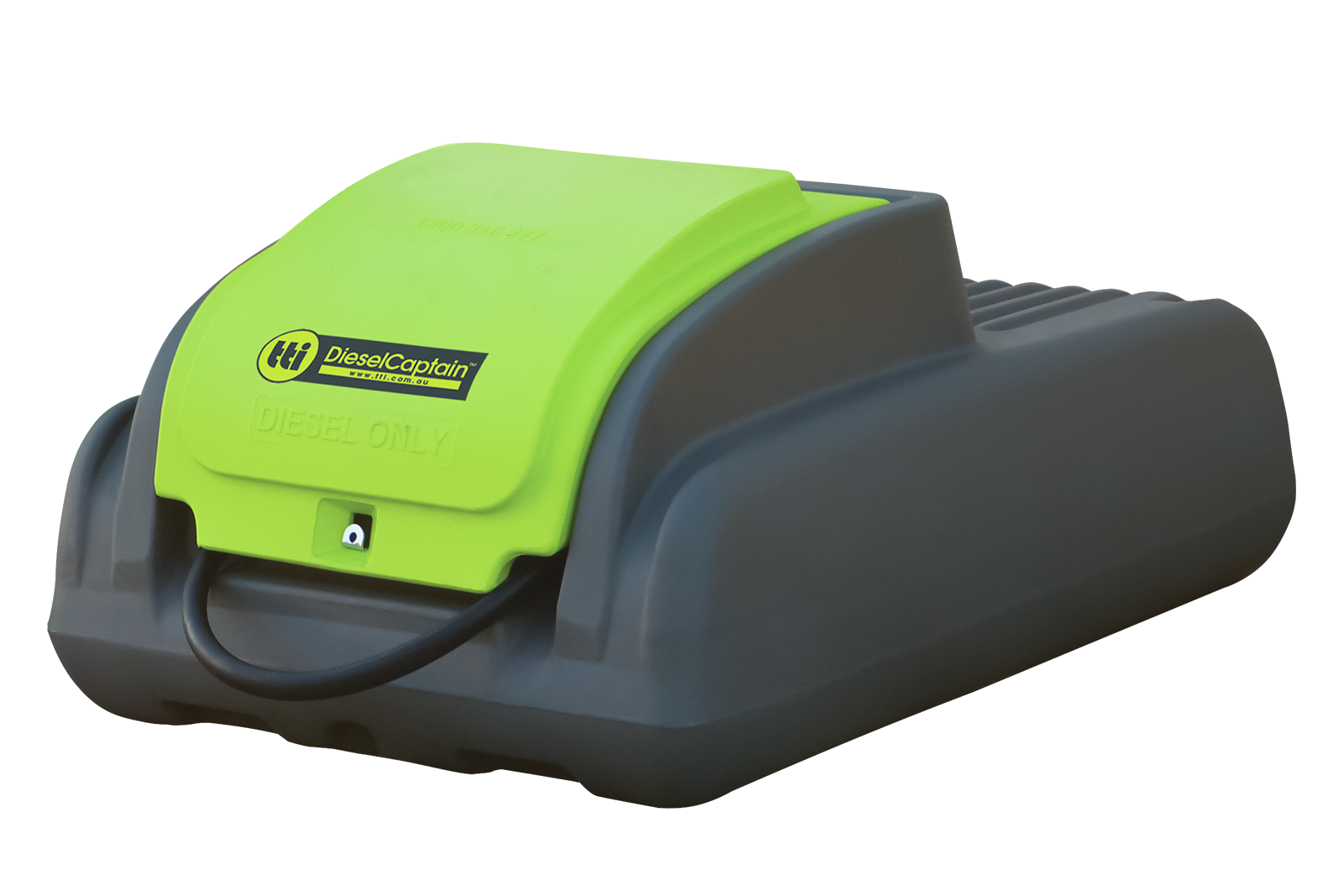
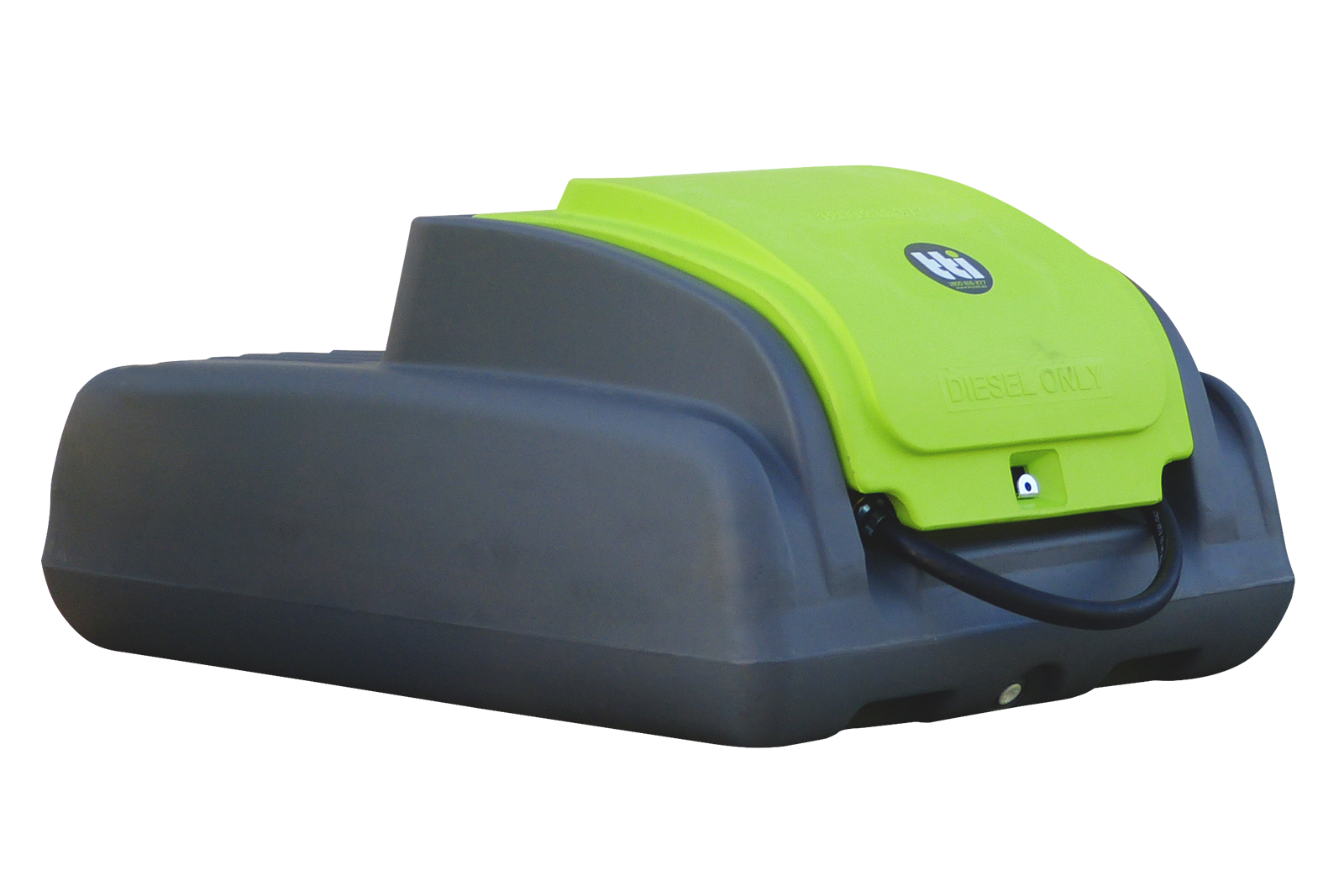
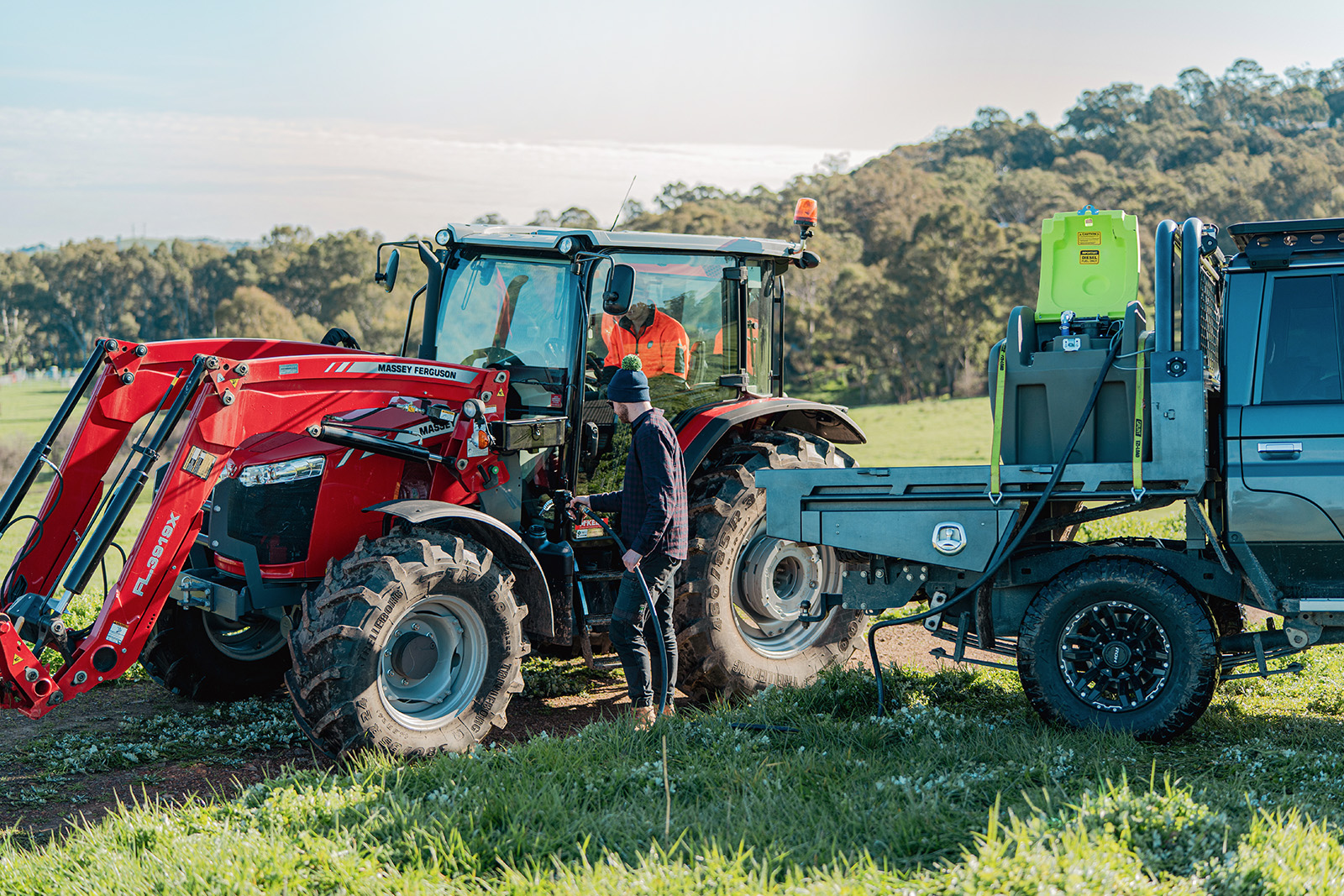
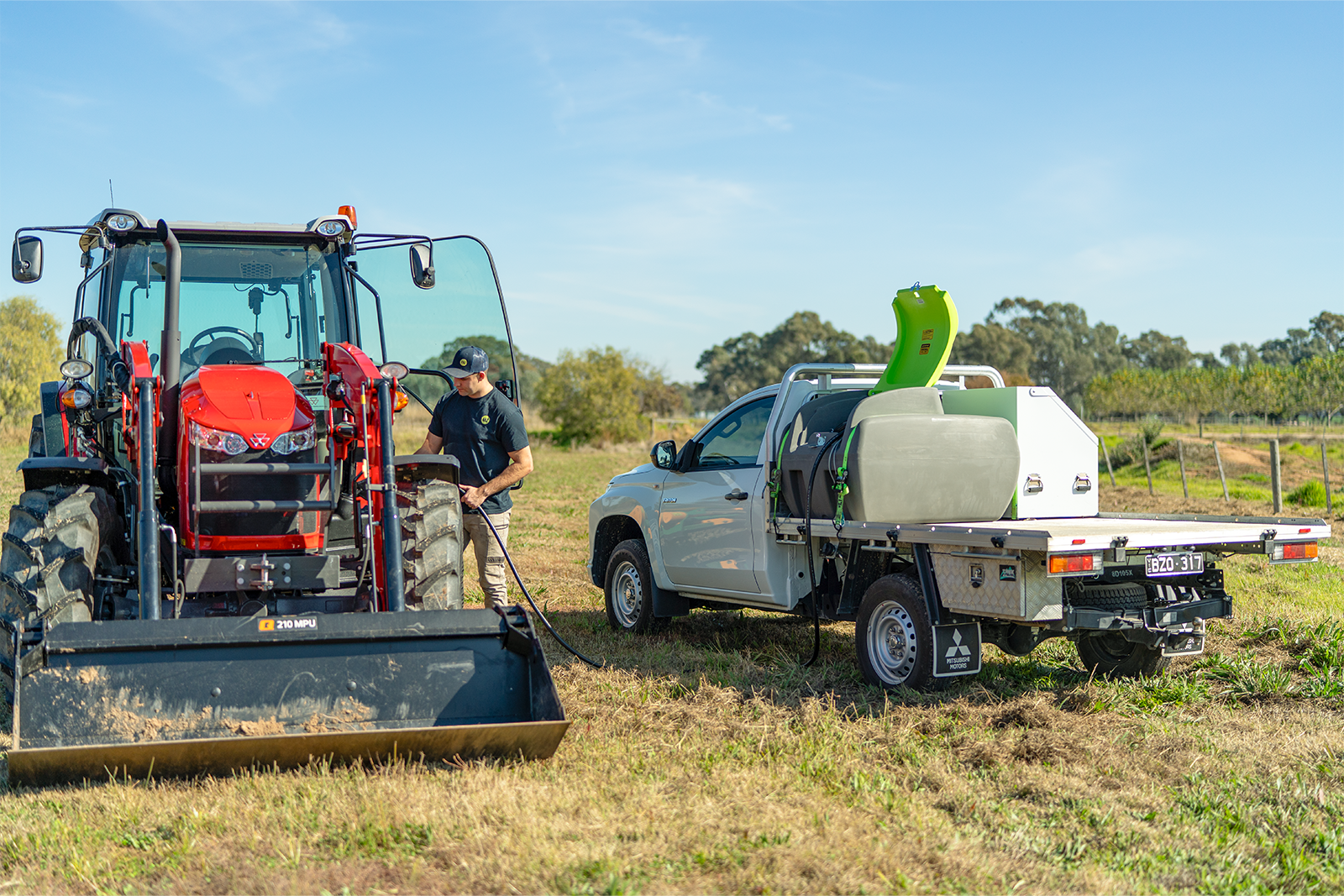
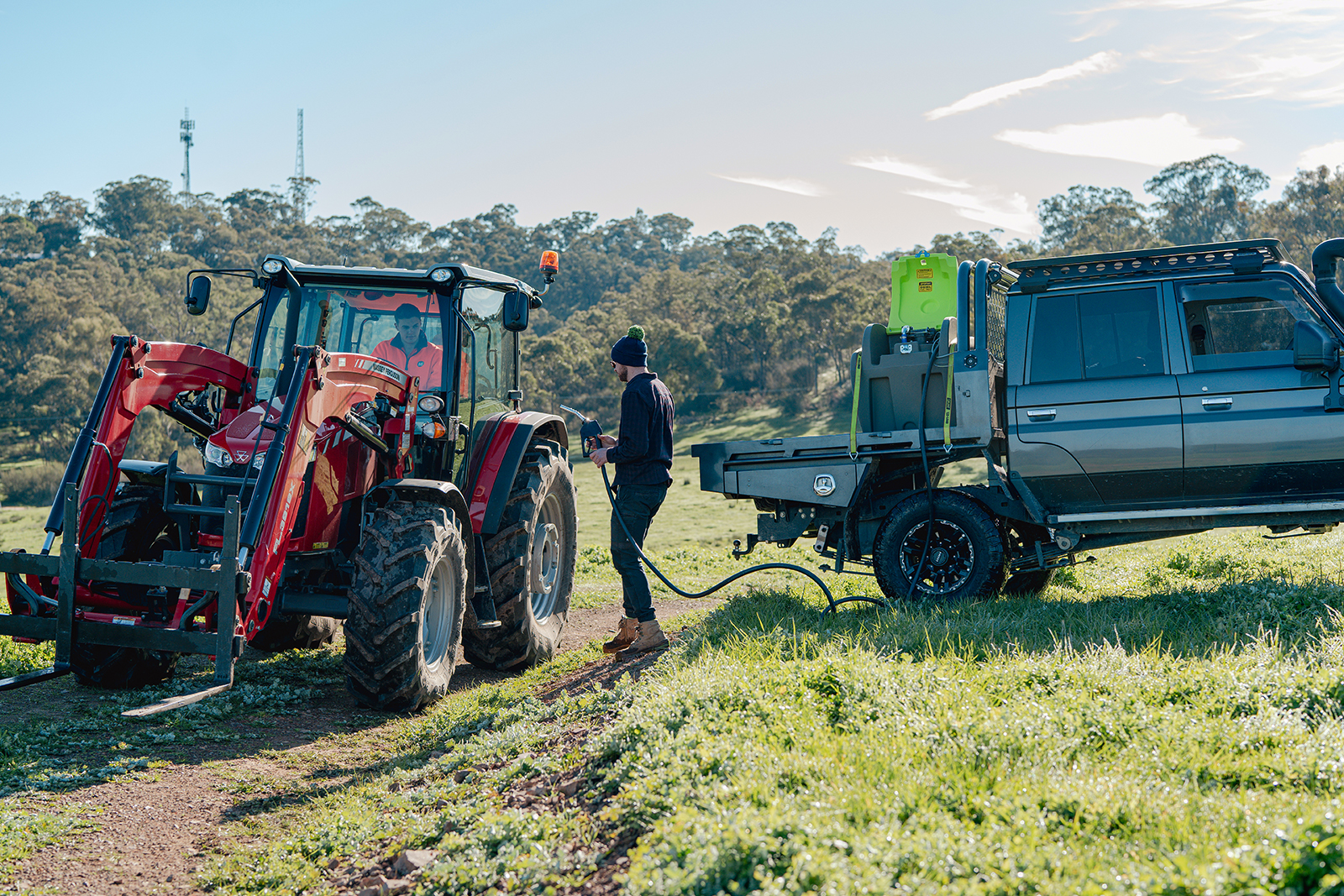
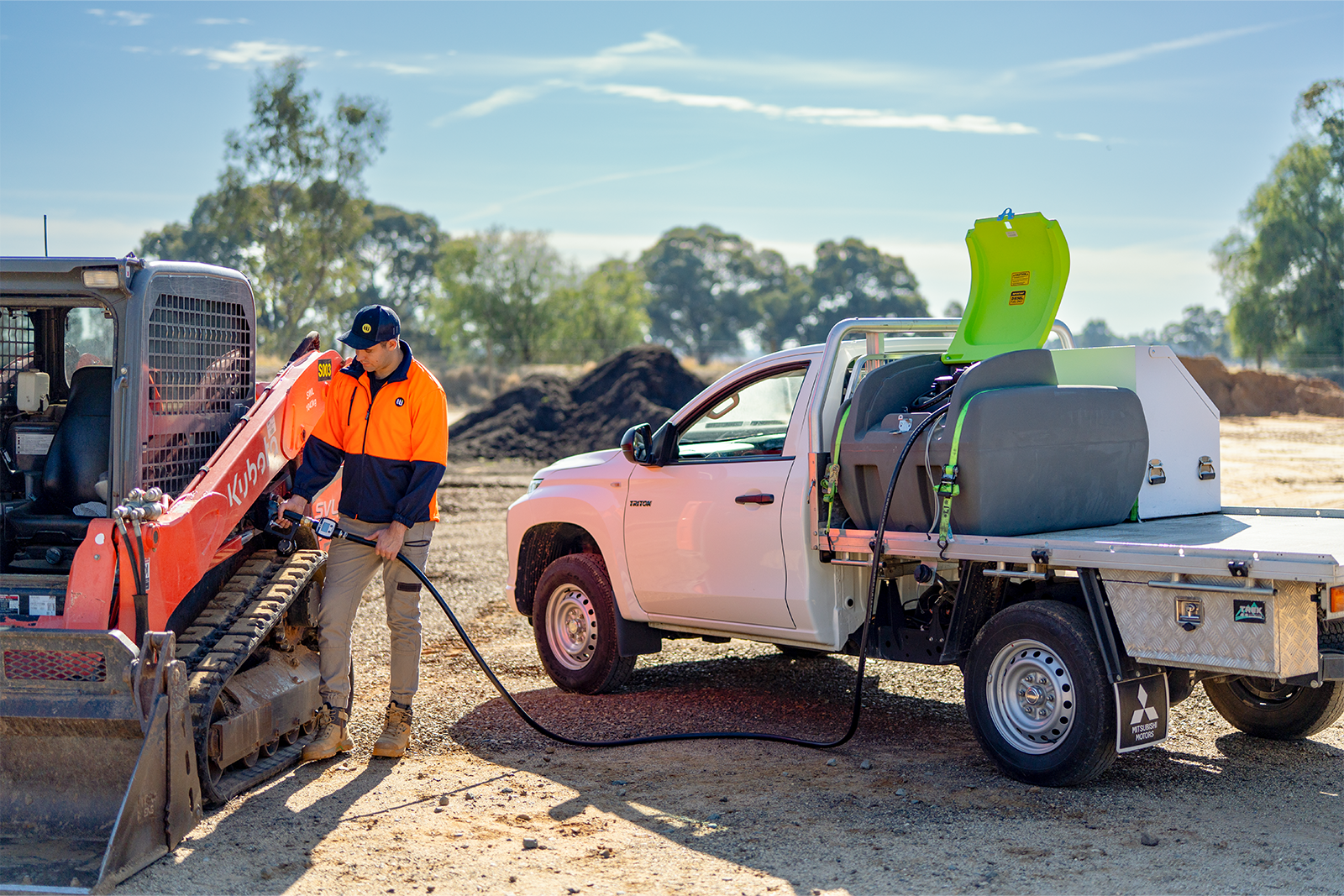

- Manufactured from specially formulated diesel-grade polyethylene, our diesel tanks comply with Australian Standards AS1940-2004 and AS2809.2-2008 for the safe transportation of flammable liquids and dangerous goods by road.
- Heavy-duty rotomolded tank with integrated lifting handles for ease of transport
- Moulded with our unique aluminium ring for incredible strength, this multi seal system keeps the rain out, and your diesel in
- 25-year tank warranty
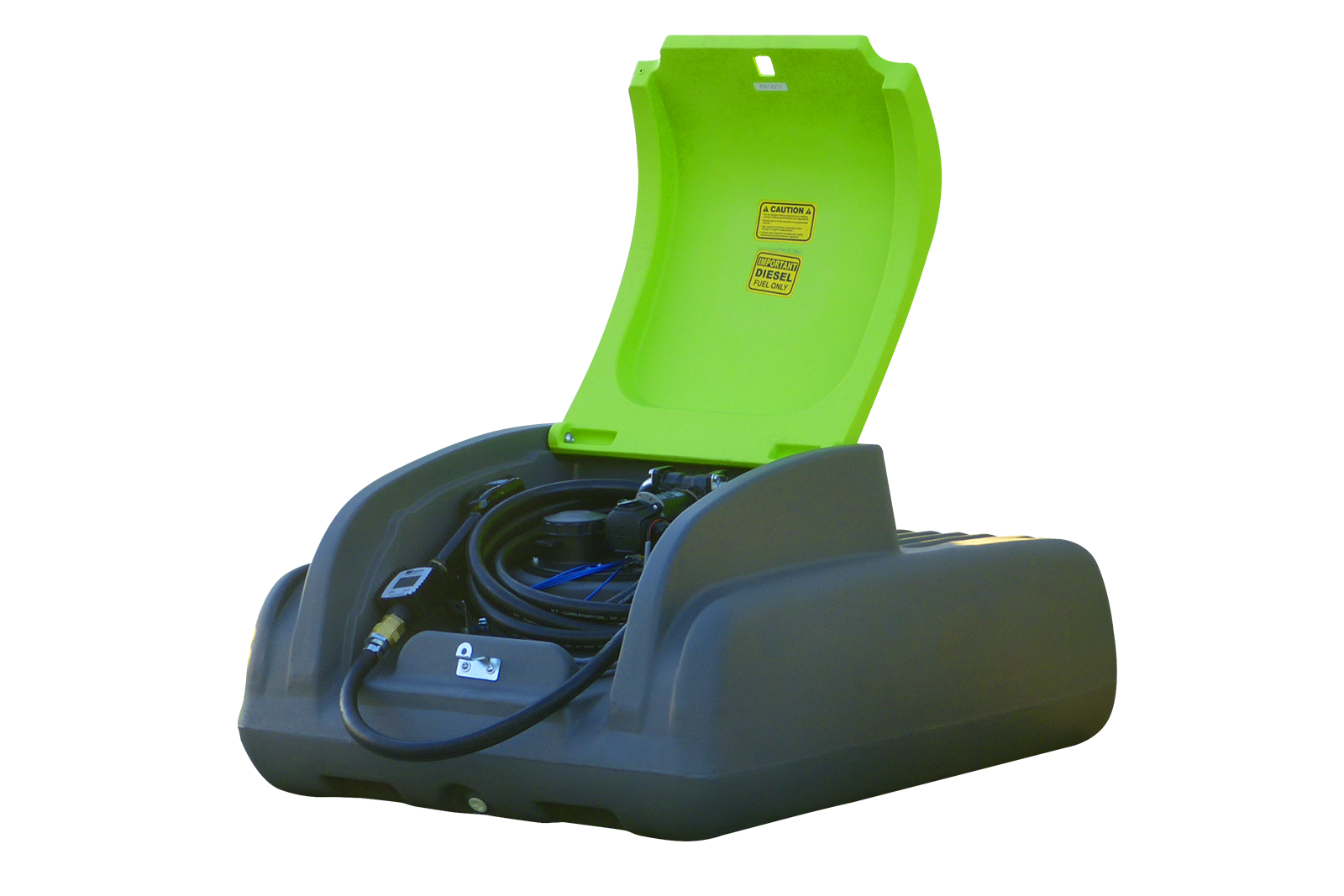
- Strong poly lid with pad-lockable locking latch to protect pump compartment and your diesel
- Double-hinged lock-able pump cover provides pump protection
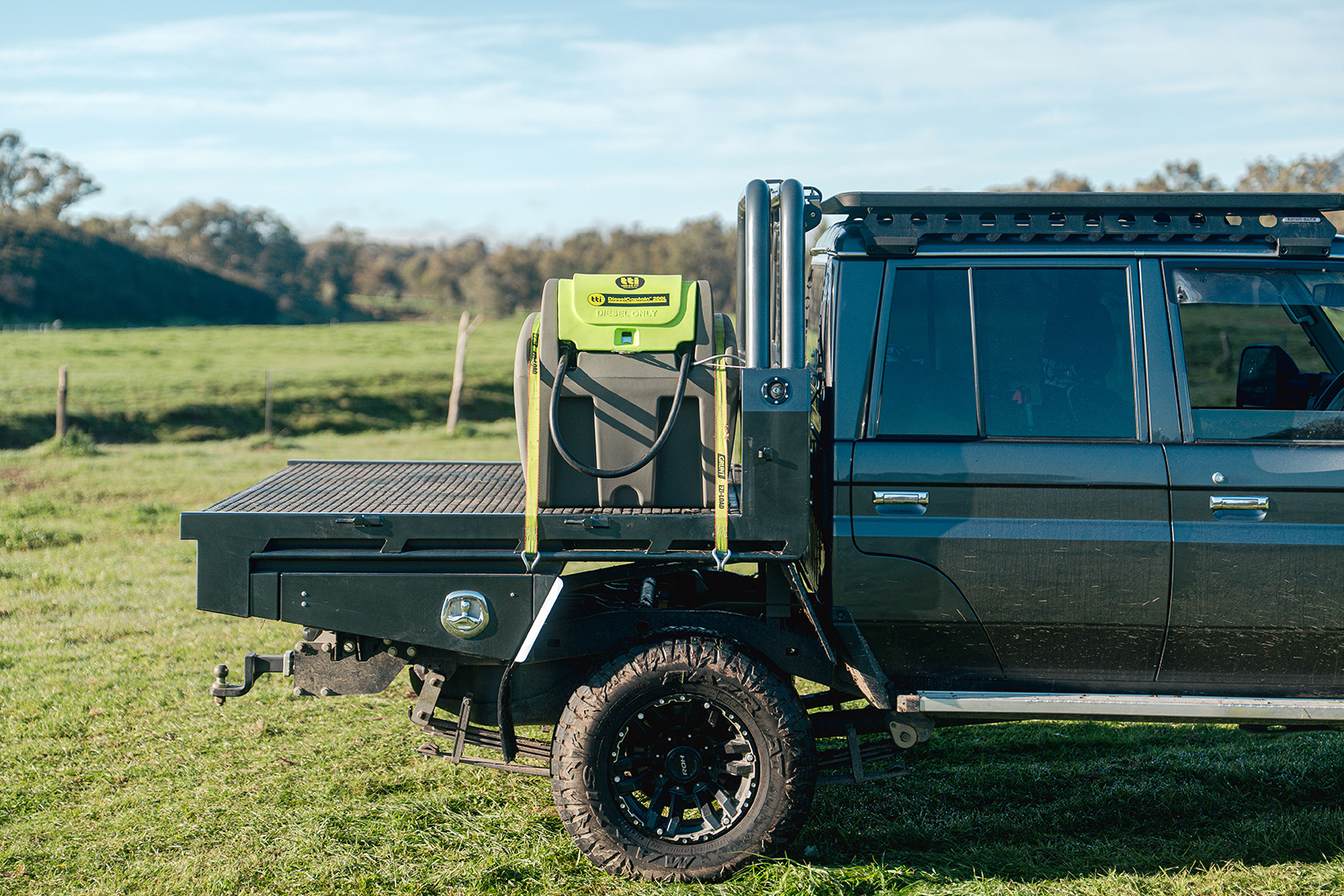
- Integrated strap tie-down provisions for securing tank
- Pump bolted to a large removable aluminum lid
- Protected Tank Breather System & Anti-static Earth Strap
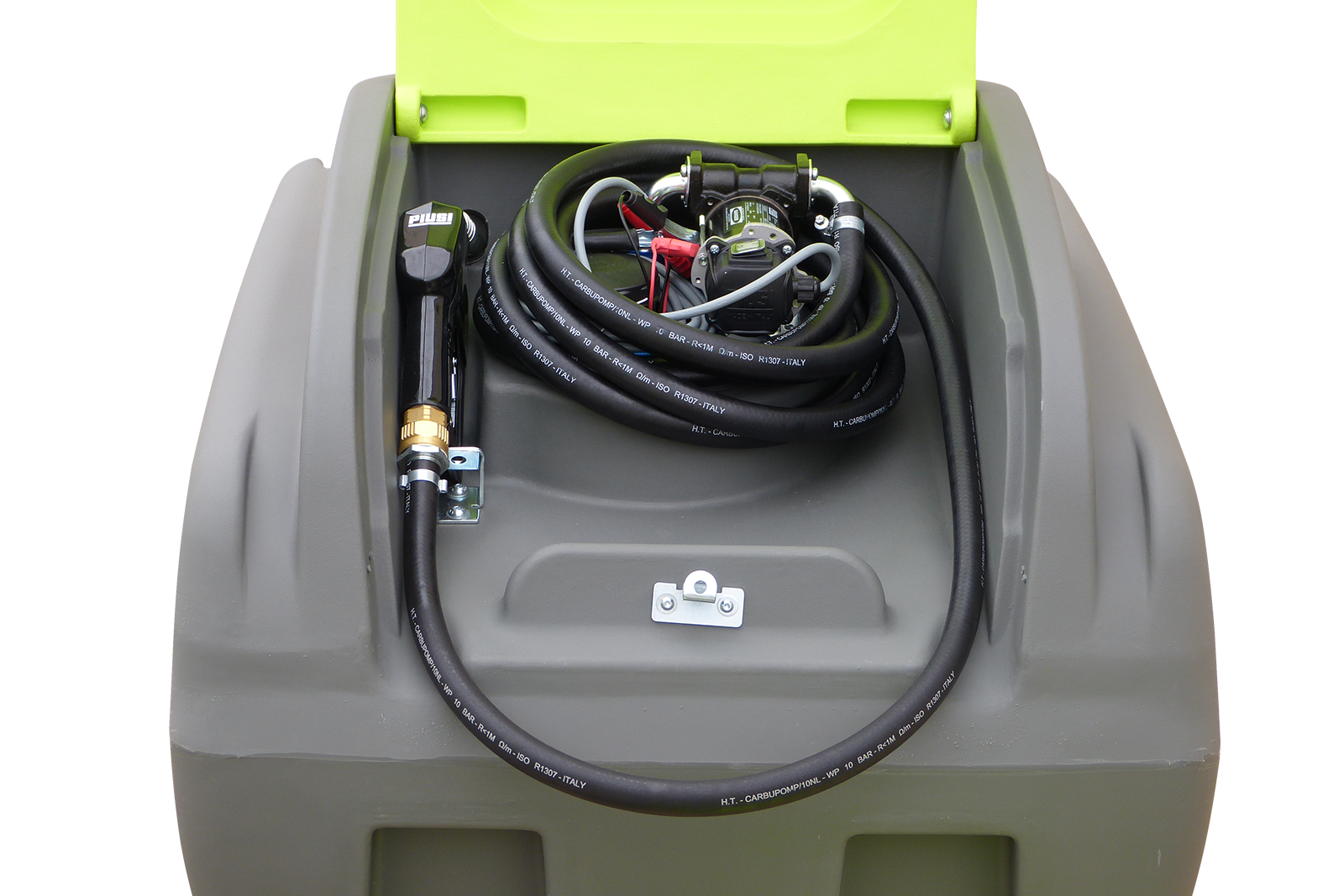
- Kink resistant 4m or 6m delivery hose with 3/4” Auto Shut Off Nozzle
- Fitted with high-flow 40L/min 12v Transfer40 Pump or 50L/min 12v Piusi Pump with 4m battery cables
- Dimensions (LWH): 1150 x 820 x 565mm
| Weight: | 37kg |
| Length: | 1150mm |
| Width: | 820mm |
| Height: | 565mm |
DieselCaptain™
200L DieselCaptain™ Portable Diesel Fuel Tank Pod (Low-Profile)
200L DieselCaptain™ Low Profile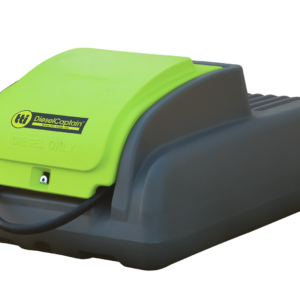
PRICING DISPLAYED IS THE FROM PRICE. COST MAY VARY DUE TO OPTIONAL INCLUSIONS
 1800 816 277
Contact our team to find out:
- If this product is right for you
- Info and pricing on options & accessories
- Stock availability & delivery timeframe
- More about our nation-wide subsidised freight
- Manufactured from specially formulated diesel-grade polyethylene, our diesel tanks comply with Australian Standards AS1940-2004 and AS2809.2-2008 for the safe transportation of flammable liquids and dangerous goods by road.
- Heavy-duty rotomolded tank with integrated lifting handles for ease of transport
- Moulded with our unique aluminium ring for incredible strength, this multi seal system keeps the rain out, and your diesel in
- 25-year tank warranty
- Strong poly lid with pad-lockable locking latch to protect pump compartment and your diesel
- Double-hinged lock-able pump cover provides pump protection
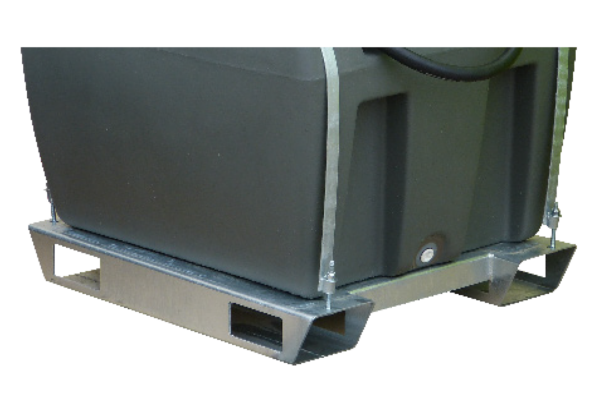
- Integrated strap tie-down provisions for securing tank
- Pump bolted to a large removable aluminum lid
- Protected Tank Breather System & Anti-static Earth Strap
- Kink resistant 4m or 6m delivery hose with 3/4” Auto Shut Off Nozzle
- Fitted with high-flow 40L/min 12v Transfer40 Pump or 50L/min 12v Piusi Pump with 4m battery cables
- Dimensions (LWH): 1150 x 820 x 565mm
| Weight: | 37kg |
| Length: | 1150mm |
| Width: | 820mm |
| Height: | 565mm |
Features
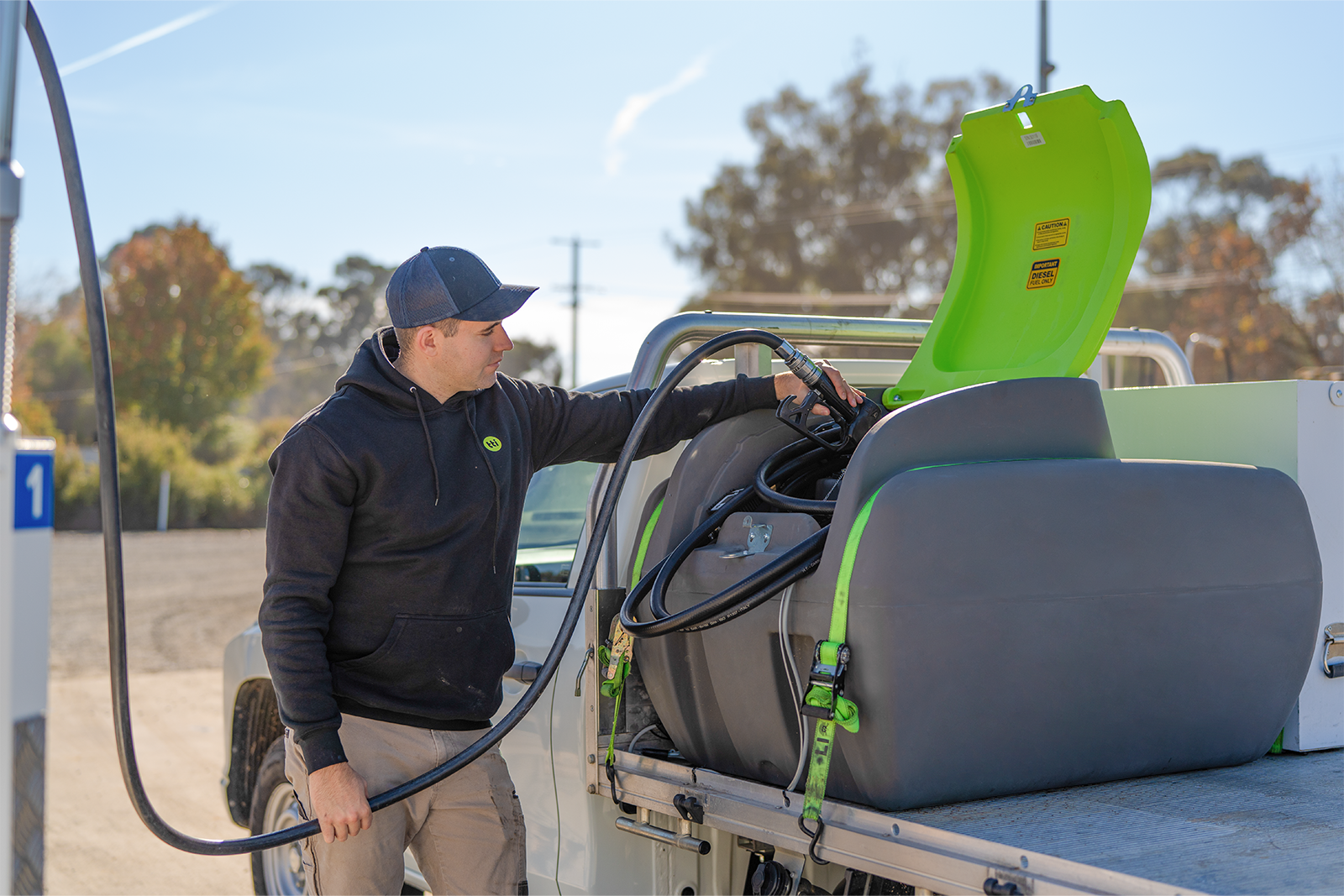
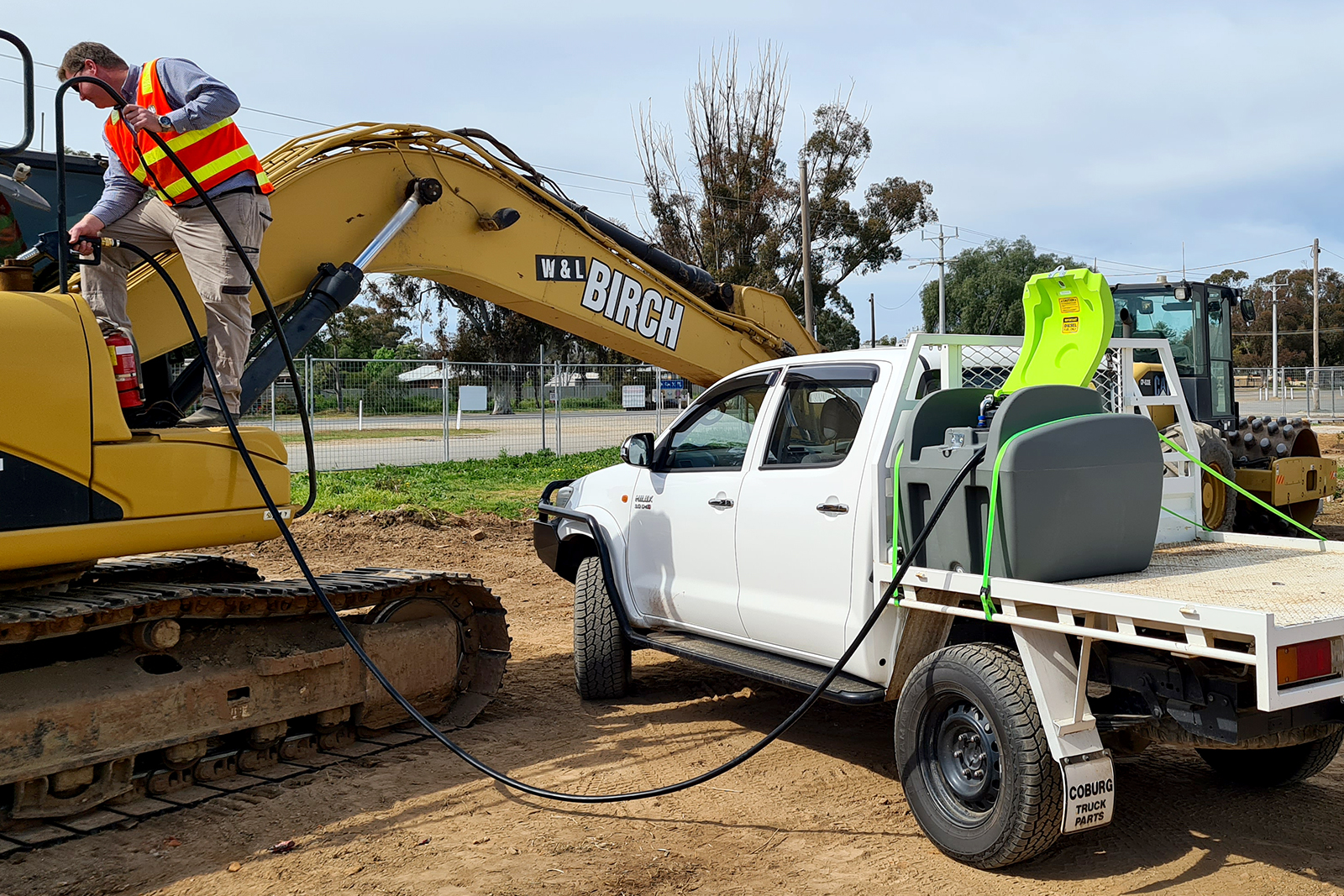
Refuel your equipment quickly and effortlessly with our high-flow 40L/min 12v Transfer40 Pump or 50L/min 12v Piusi Pump
Ergonomic lifting handles are embedded in the tank design for easy loading and unloading
4m or 6m Delivery Hose, ensuring you can easily reach your equipment
Pad lockable locking latch for lid, to protect your investment!
Integrated tie-down provisions for securing tank
Prevents static build-up and potential of ignition while refuelling
A unique tank breather system prevents the tank from sucking in
Easily reach your vehicle battery or power source!
FAQs
What types of diesel can be stored in the 200L DieselCaptain™ tank?
The 200L DieselCaptain™ tank is designed specifically for storing diesel fuel. It is not suitable for other fuel types or liquids, as doing so could compromise safety, performance, and compliance with Australian Standards.
Can the DieselCaptain™ tank be used in remote locations?
Yes, the compact and low-profile design, combined with integrated lifting handles, makes the DieselCaptain™ ideal for use in remote or hard-to-access locations. Always secure the tank properly during transport and follow local regulations for fuel storage and handling.
What maintenance is required for the DieselCaptain™ tank?
Regularly inspect the tank, pump, and hoses for signs of wear or leaks. Clean the tank and filtration system periodically to prevent contamination and ensure reliable fuel delivery. Keep seals and fittings tight to maintain system integrity.
Can I use the DieselCaptain™ tank for refuelling machinery?
Yes, the DieselCaptain™ is purpose-built for on-site machinery refuelling. Ensure the pump and nozzle are compatible with your machinery’s fuel intake to guarantee efficient and safe transfer.
Is there a recommended way to store the DieselCaptain™ tank when not in use?
When not in use, store the DieselCaptain™ in a cool, shaded area away from direct sunlight. Empty and clean the tank before long-term storage to prevent residue build-up and extend the life of seals and components.
What should I do if the pump stops working?
If the pump fails to operate, first check the power connections and verify the power source. Inspect for clogs or airlocks in the fuel line. If the issue persists, refer to the user manual or contact a qualified technician for assistance.

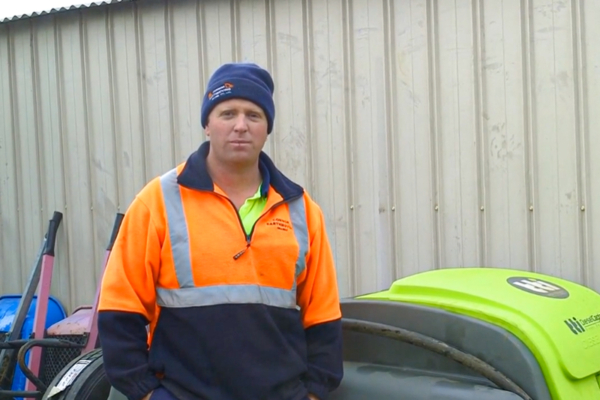
“Has all the good quality nozzles with a good length hose, good quality pump which has never let us down – pumping out 85L/min ….. very durable and reliable units.”
Dean, Ho’s Hire – DieselCaptain™
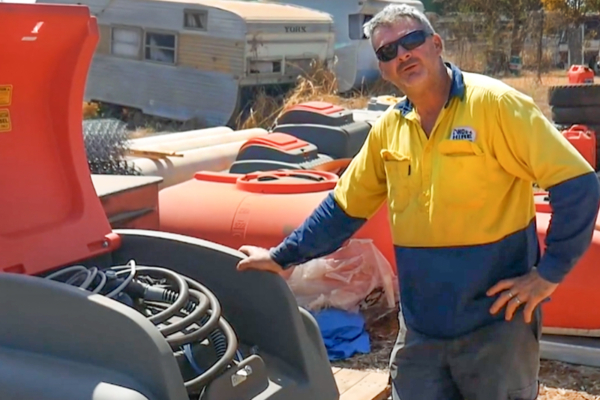
“We run a few of these diesel pods… we come across this TTi brand and that’s all we buy now. Compared to the competitors, these are a lot better unit – high flow rates and we don’t have any issues with these tanks at all”
Ricky, Connor Earthmoving – DieselCaptain™