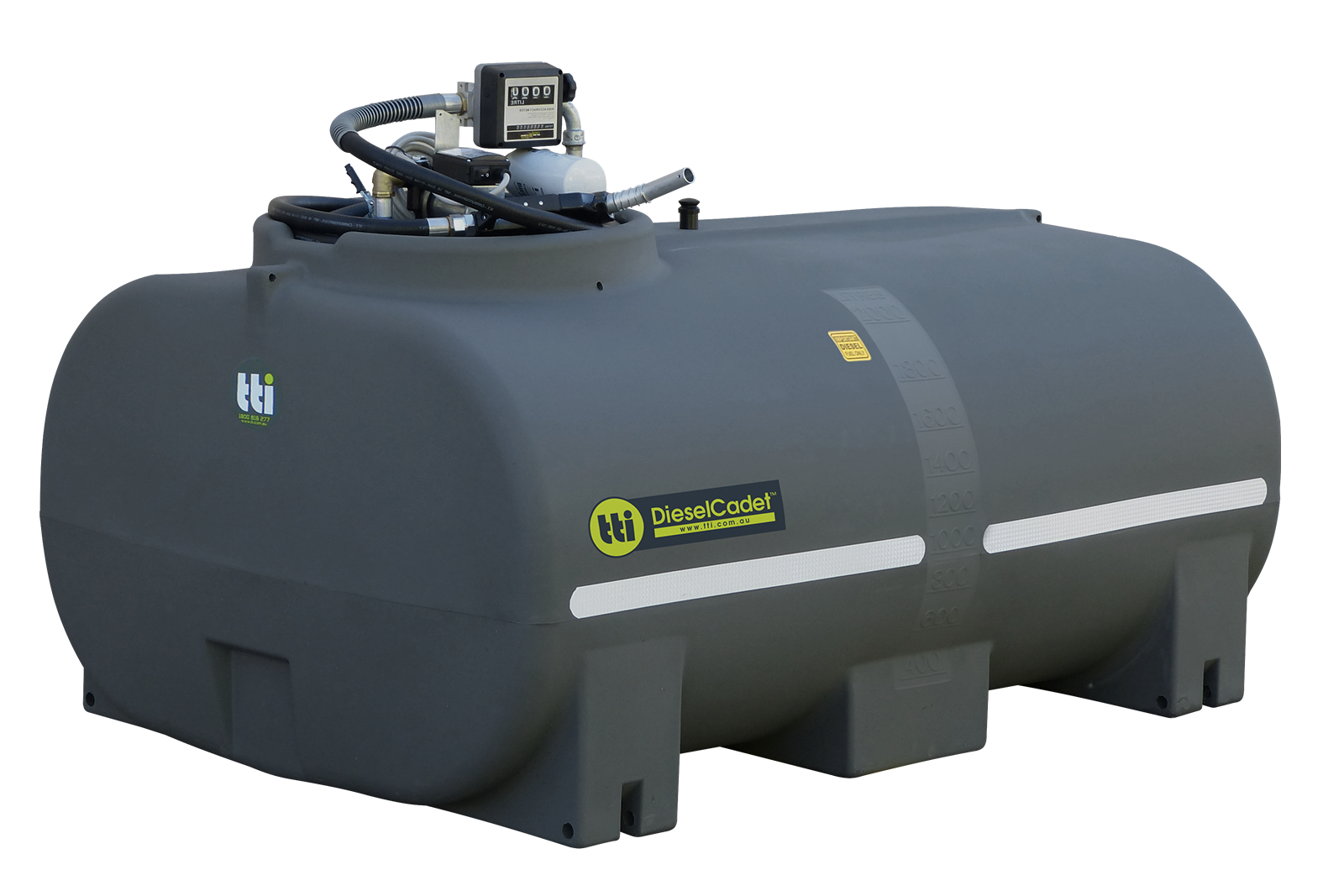
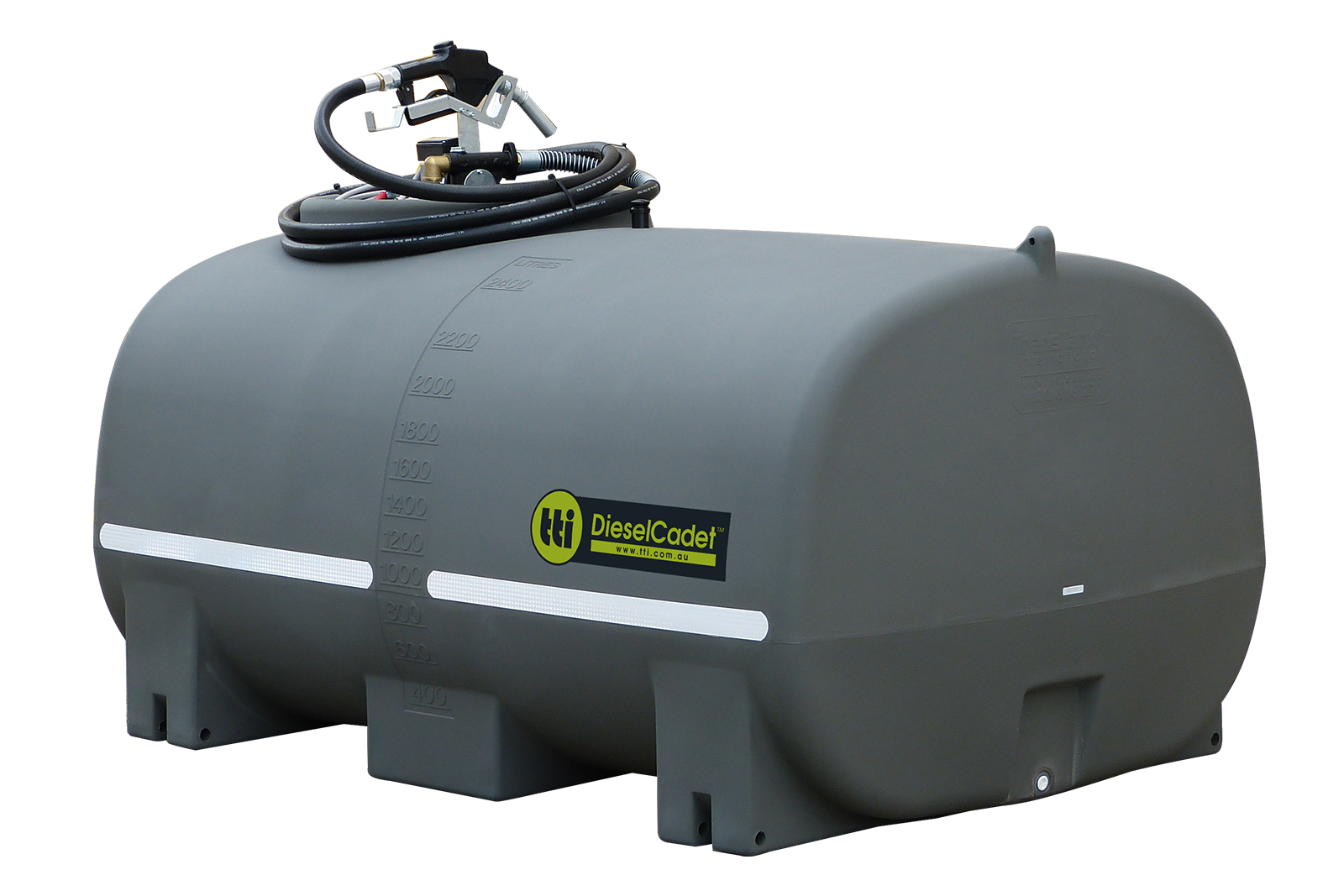
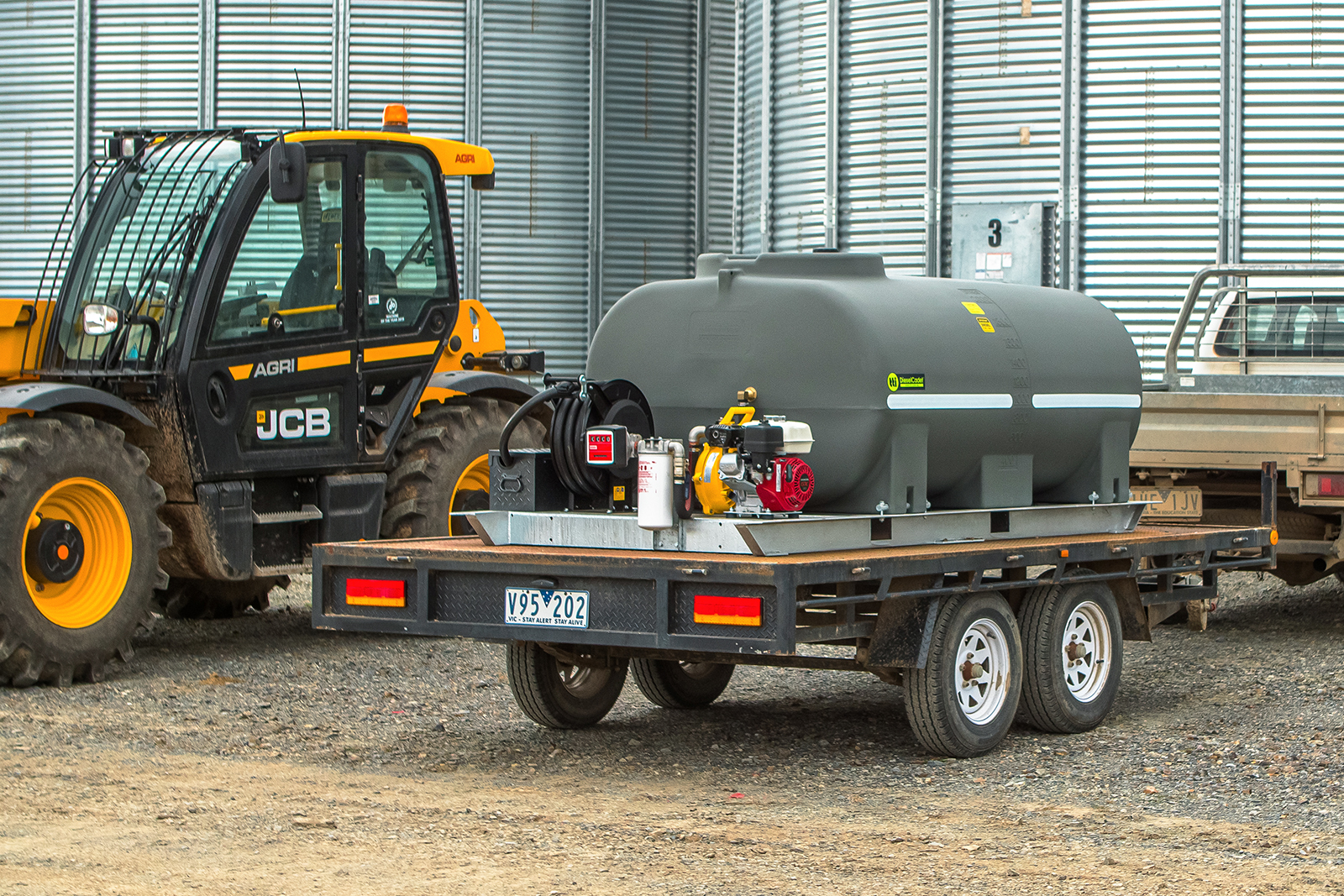
- Manufactured from specially formulated diesel-grade polyethylene, our diesel tanks comply with Australian Standards AS1940-2004 and AS2809.2-2008 for the safe transportation of flammable liquids and dangerous goods by road.
- 25 Year Tank Warranty
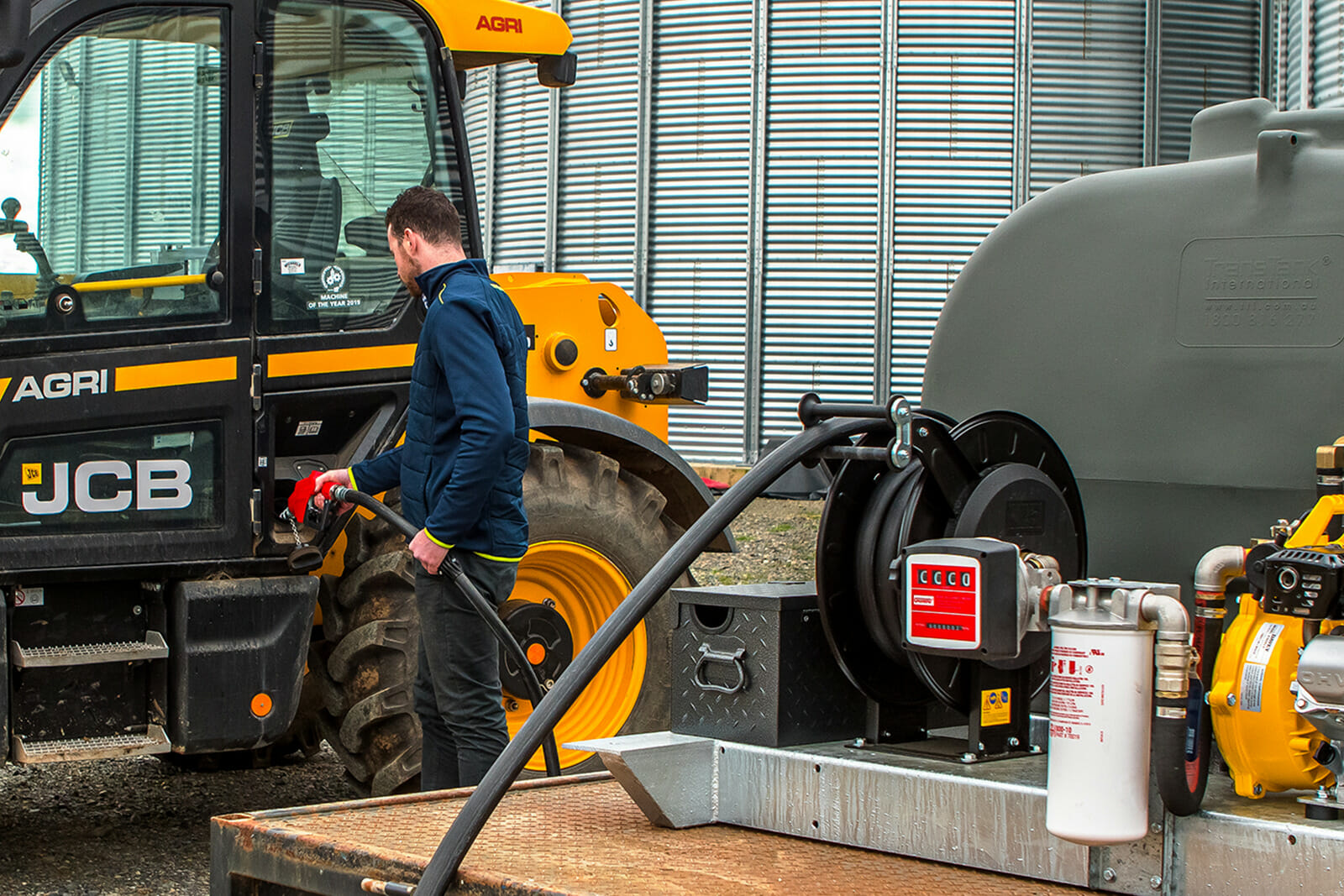
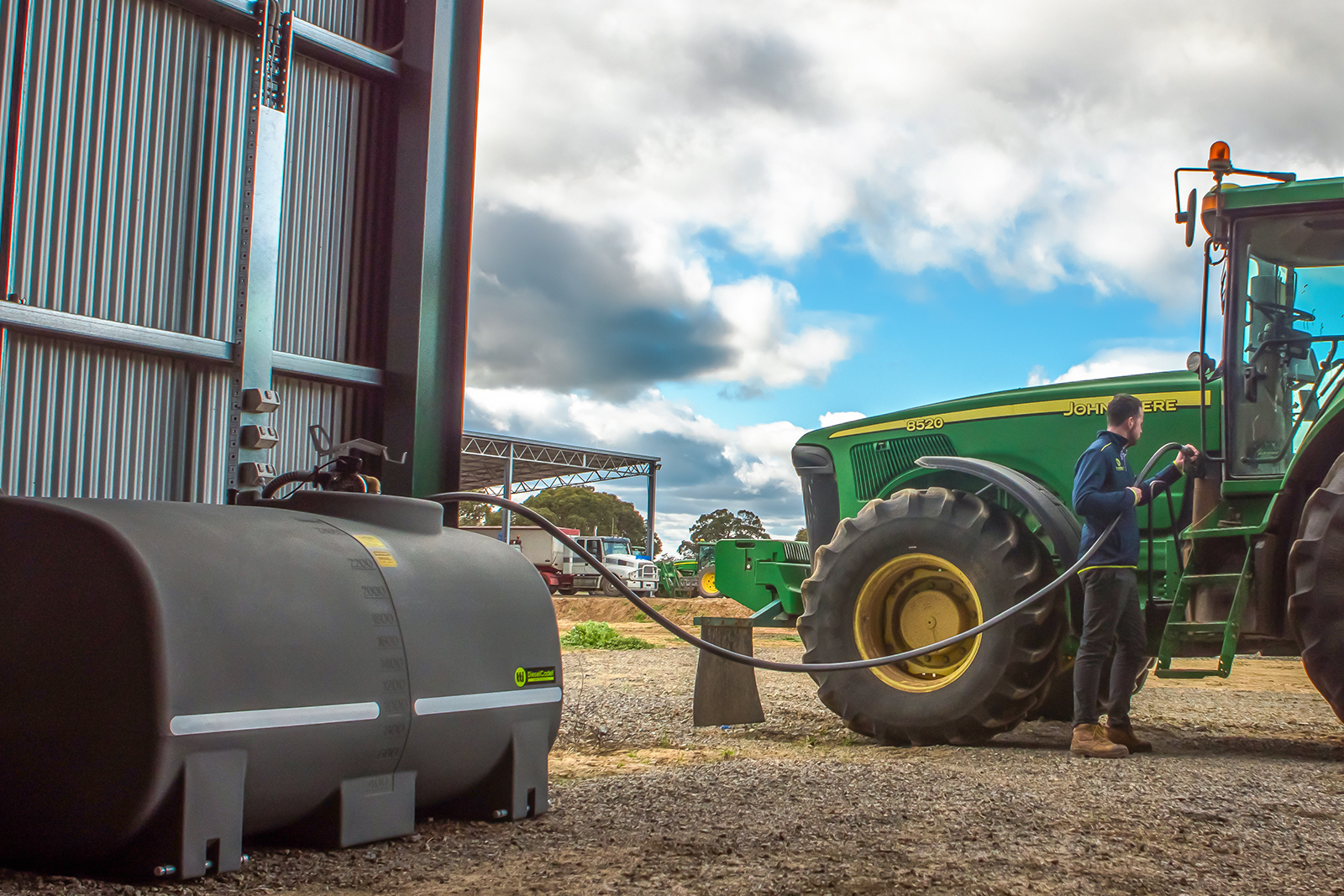
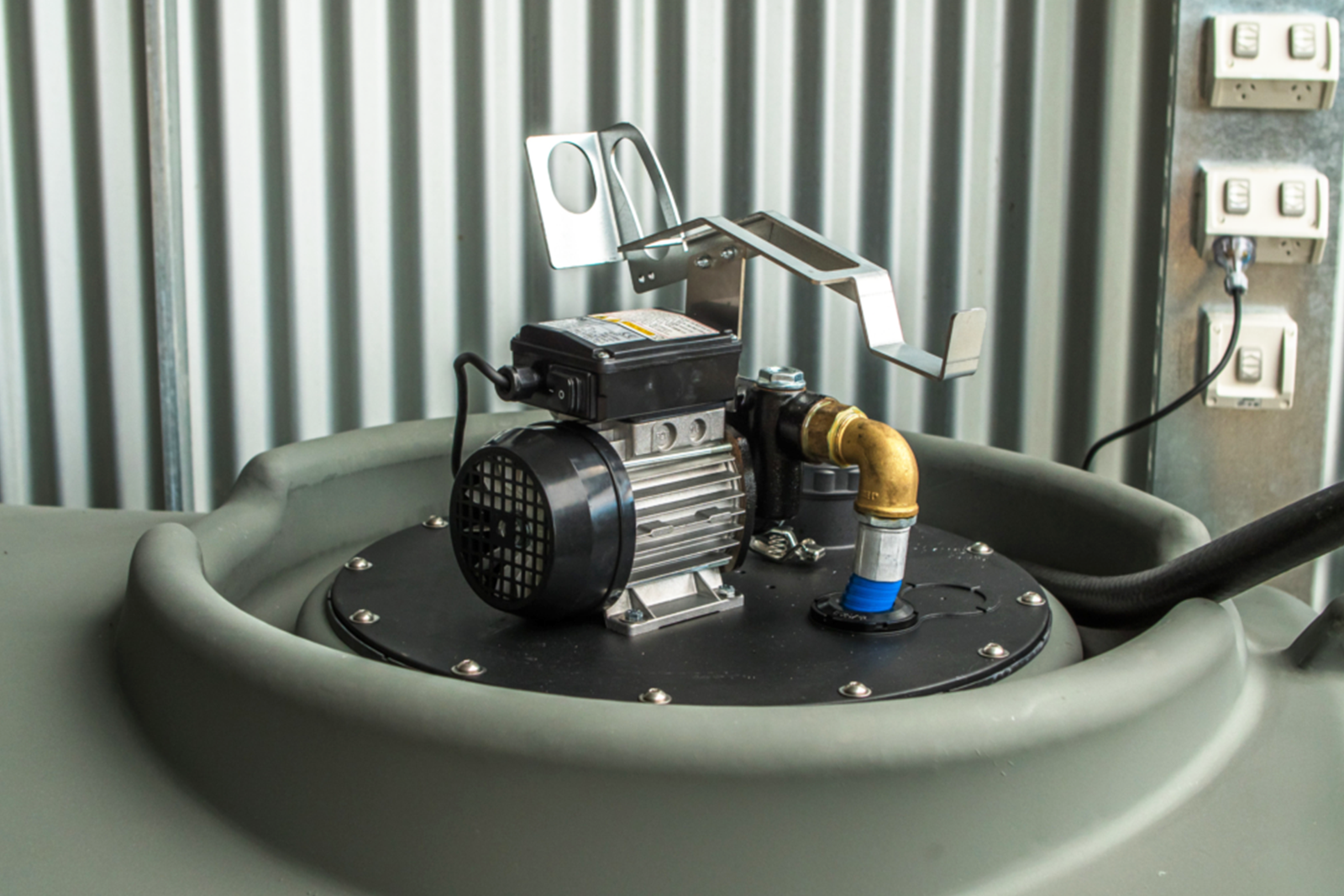
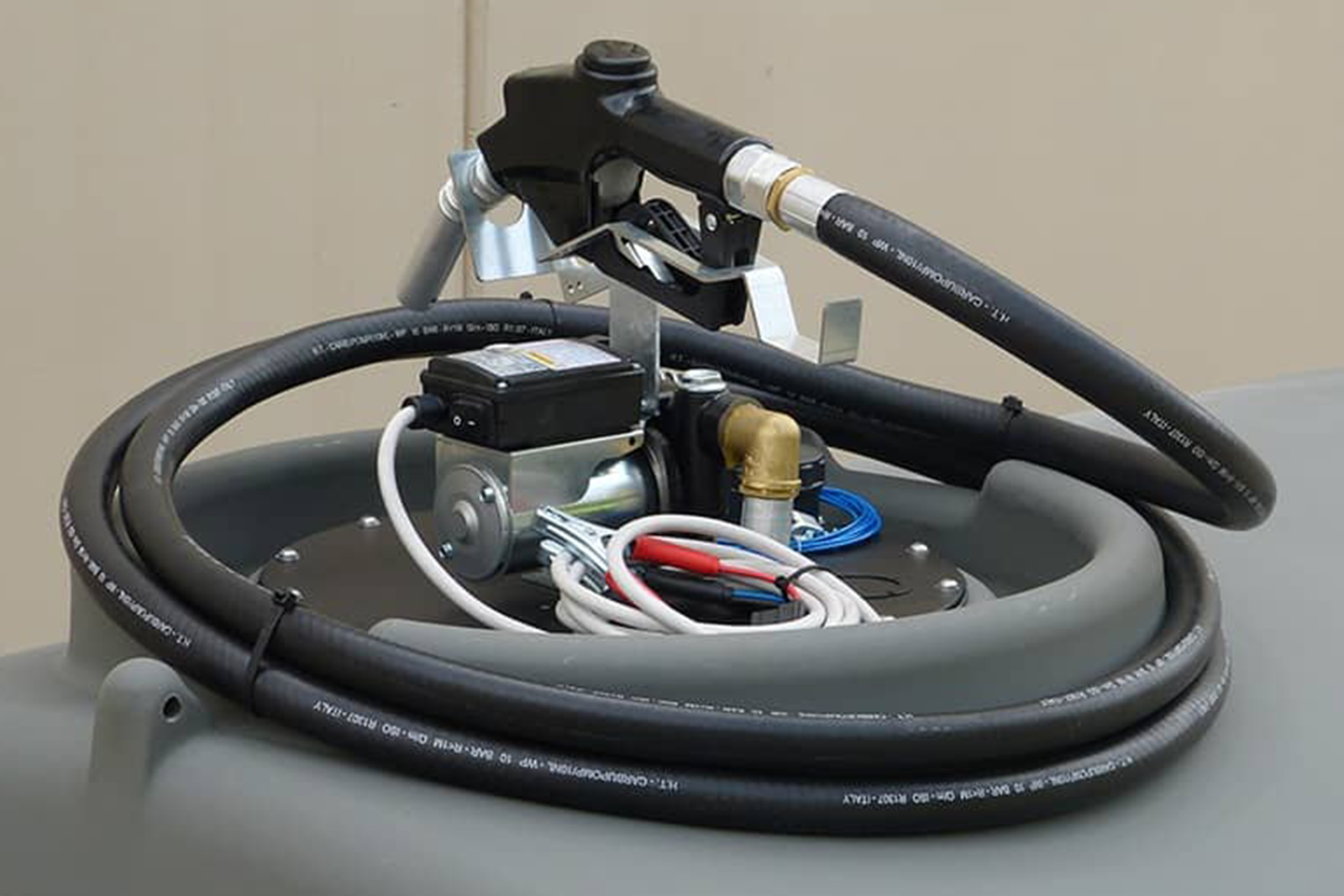
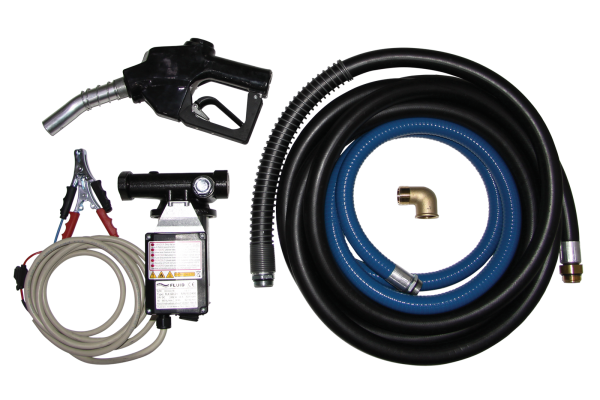
- Available with 60L/min Fluid 12v pump, 4m battery cables and 6m delivery hose with auto-stop nozzle (optional)
- Lockable filler cap for security
- 455mm Lid and seal assy
- ¾” Drain bung and optional brass outlet
- Earth strap to prevent static build-up
- Pad-lockable filler cap no-spill fill system
- Splash resistant breather system specifically designed for diesel transport
- Large removable plate lid allows access to tank if required
- 4 x Mounting pins supplied for easy and secure mounting
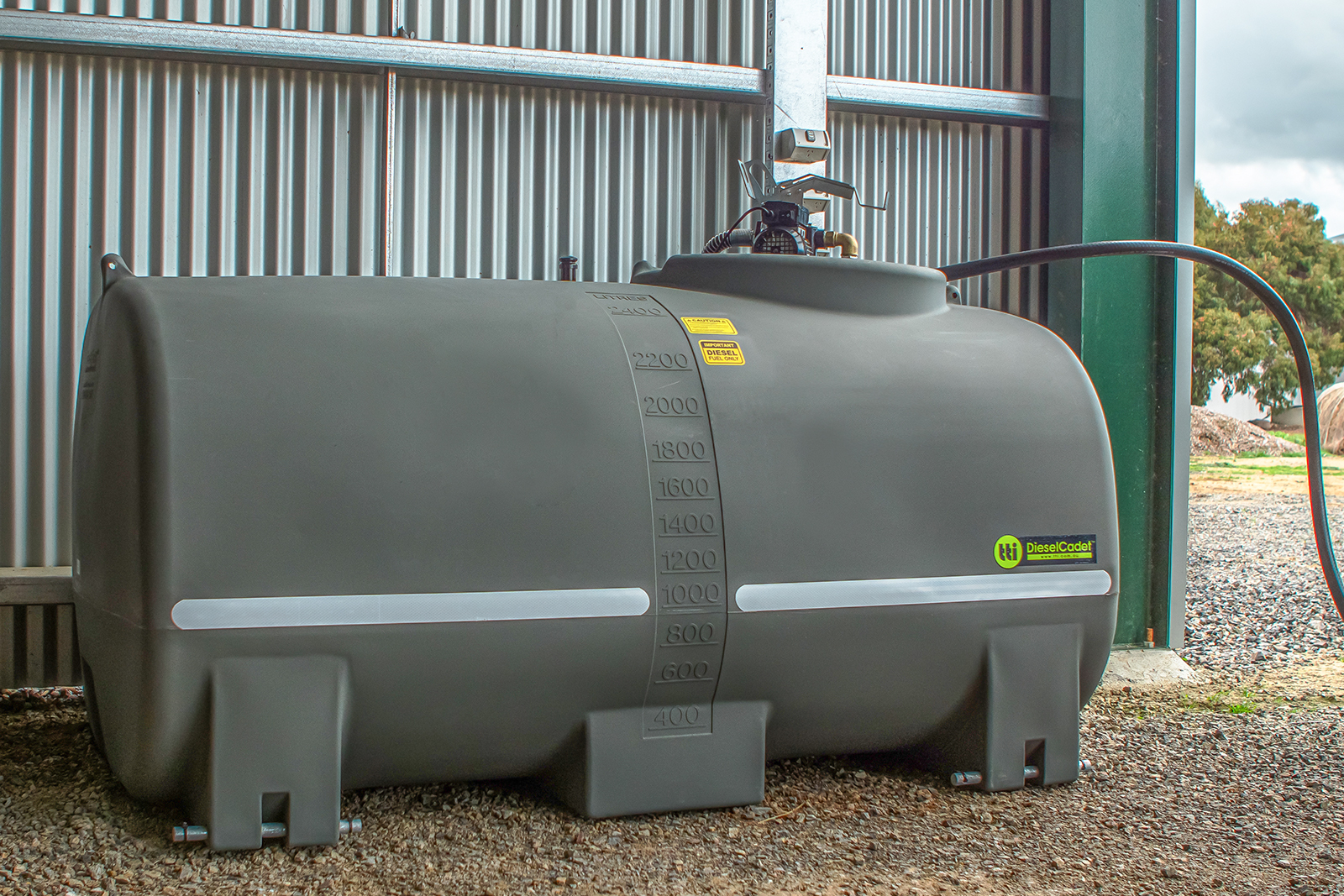
- Easy to read calibrated measurements
| Tank Only | With Pump | |
| Weight: | 125kg | 154kg |
| Length: | 2150mm | 2150mm |
| Width: | 1410mm | 1410mm |
| Height: | 870mm | 1300mm |
DieselCadet™ Poly Diesel Tanks
2000L DieselCadet™ Free-Standing Diesel Tank
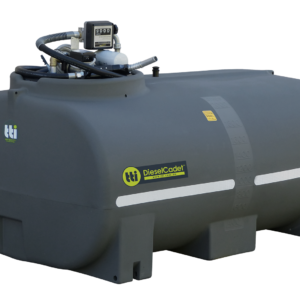
2000L DieselCadet™
PRICING DISPLAYED IS THE FROM PRICE. COST MAY VARY DUE TO OPTIONAL INCLUSIONS
 1800 816 277
Contact our team to find out:
- If this product is right for you
- Info and pricing on options & accessories
- Stock availability & delivery timeframe
- More about our nation-wide subsidised freight
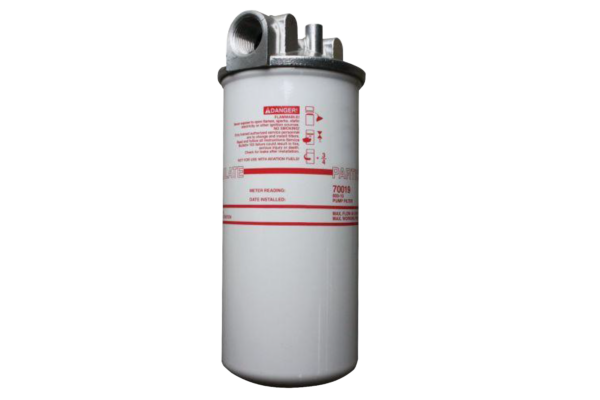
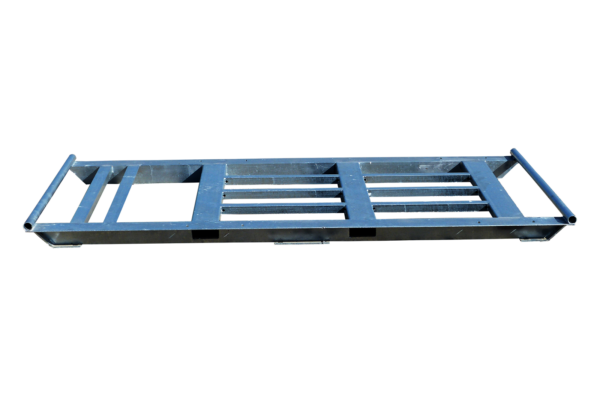
- Manufactured from specially formulated diesel-grade polyethylene, our diesel tanks comply with Australian Standards AS1940-2004 and AS2809.2-2008 for the safe transportation of flammable liquids and dangerous goods by road.
- 25 Year Tank Warranty
- Available with 60L/min Fluid 12v pump, 4m battery cables and 6m delivery hose with auto-stop nozzle (optional)
- Lockable filler cap for security
- 455mm Lid and seal assy
- ¾” Drain bung and optional brass outlet
- Earth strap to prevent static build-up
- Pad-lockable filler cap no-spill fill system
- Splash resistant breather system specifically designed for diesel transport
- Large removable plate lid allows access to tank if required
- 4 x Mounting pins supplied for easy and secure mounting
- Easy to read calibrated measurements
| Tank Only | With Pump | |
| Weight: | 125kg | 154kg |
| Length: | 2150mm | 2150mm |
| Width: | 1410mm | 1410mm |
| Height: | 870mm | 1300mm |
Features
Design for easy access and filling
Allows easy and complete drainage of your tank
4 pcs. mounting pins supplied for easy & secure mounting
Marked on side wall of tank for quick measurement of contents
Gives extra reach
Prevents overfilling and fuel wastage
Allows easy access to tank if required
FAQs
What is the 2000L DieselCadet™ best suited to?
This 2000 litre diesel tank is commonly used on farms, job sites and remote setups where larger gear or multiple machines need regular top-ups. It’s a great fit for anyone who’s outgrown smaller mobile units.
What is the best way to secure the DieselCadet™ tank during transport?
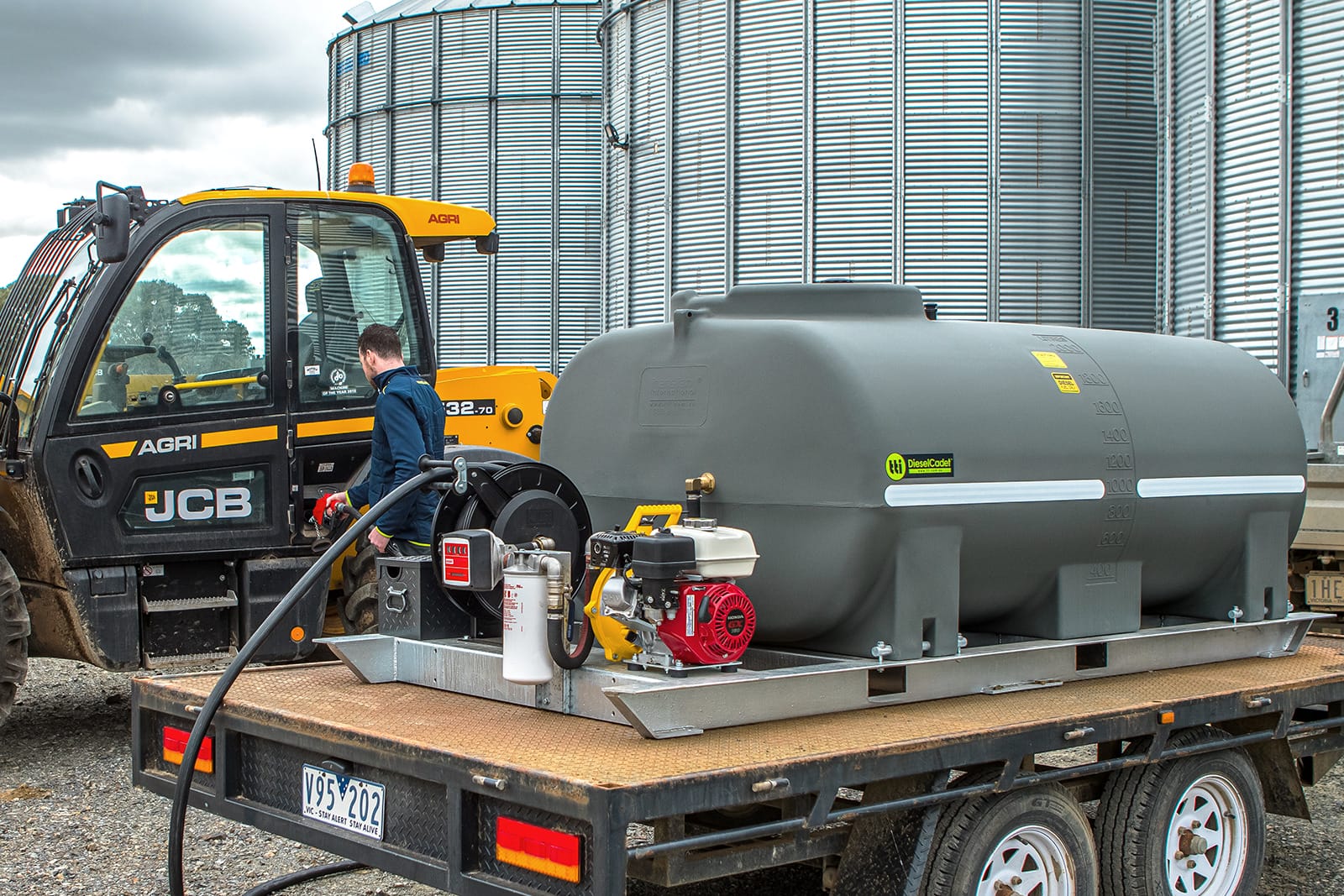
Use the supplied galvanised mounting pins to secure the tank to your vehicle or trailer. Always position it on a flat, stable surface, and use additional tie-downs or restraints when operating on uneven or off-road terrain to prevent movement. Ensuring proper mounting minimises the risk of instability and enhances transport safety.
Can I leave it outside all year round?
You can. The tank is made from high-grade poly that’s UV-stabilised and resistant to cracking or warping. It’s built for long-term use in Aussie weather, so you don’t need to worry about rust or sun damage.
Can the DieselCadet™ tank be used for other liquids besides diesel?
No. The DieselCadet™ tank is purpose-built for diesel fuel and fully compliant with Australian Standards for the safe storage and transport of combustible liquids. It must not be used for petrol or other incompatible fuels, as this may compromise safety and void warranty. If you need to store or transfer alternative liquids, contact TTi for expert guidance and a Liquid Compatibility Chart.
What maintenance is required for the DieselCadet™ diesel tank?
Regularly inspect the tank for any signs of wear, damage, or leaks. Ensure the breather system operates correctly, and keep the lid and seal assembly clean to maintain a secure closure. Periodically check that the earth strap is intact and properly connected to prevent static build-up. Do not clean the tank with water — if required, use only diesel-compatible cleaning agents and ensure all residues are removed before refilling.
How do I ensure the pump operates efficiently?
Check that the power connections are secure and the delivery hose is correctly fitted. Regularly inspect the pump for blockages, wear, or electrical issues, and never allow it to run dry. Follow TTi’s recommended maintenance schedule and the pump’s specific servicing guidelines to ensure reliable, efficient operation.
What safety features should I be aware of when using the DieselCadet™ tank?
The DieselCadet™ features a lockable filler cap for security, an integrated earth strap to prevent static discharge, and a splash-resistant breather system to safely manage pressure. Always adhere to local regulations regarding the storage and handling of combustible liquids, and ensure the tank is operated in a well-ventilated area away from ignition sources.
